Course / Course Details

Understanding Donald Winnicott: Theory and Technique

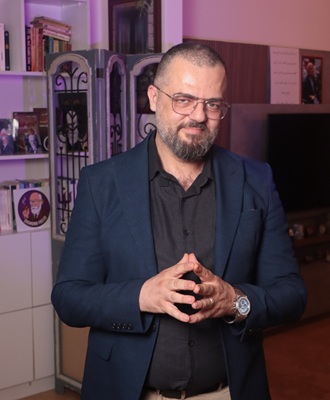
  • Dr. Elie Abou Chacra image

    By - Dr. Elie Abou Chacra

  • 0 Participants
  • N/A
  • (0)

Course Requirements

A basic understanding of psychoanalytic or psychodynamic concepts is recommended. 

Participants are expected to engage with theoretical material, clinical case discussions, and session based material throughout the training.

Course Description

This training offers an in depth exploration of Donald Winnicott’s theory and clinical technique through the lens of the maturational process, rather than as a collection of isolated concepts.


The program traces psychic development from absolute dependence and non integration toward a sense of being, relating, and the emergence of the self. Particular attention is given to the role of the facilitating environment first represented by the mother and later, clinically, by the therapist as a fundamental condition for psychic development.


Throughout the training, Winnicott’s theoretical contributions are directly linked to clinical practice, with a focus on holding, regression, fragmentation, transitional phenomena, true and false self organization, the use of the object, and the therapist’s capacity to survive and respond to the patient without premature interpretation.


The training is designed for psychologists, psychotherapists, psychiatrists, advanced psychology students, and individuals with a serious interest in contemporary psychoanalysis.


Teaching Methods

The training combines:

  • Progressive psychoanalytic lectures following Winnicott’s developmental logic
  • Applied clinical case discussions
  • Verbatim session material
  • Step-by-step analysis of therapeutic processes and interventions
  • Dynamic group discussions
  • Developmental diagrams linking theory to clinical technique


Training Duration and Schedule


Total Duration: 12 hours

Structure: Four sessions of 3 hours each


Session 1 

The Maturational Process: From Non-Integration to Being

Theoretical Content:

  • Absolute dependence
  • Early non differentiation between self and object
  • Integration
  • Personalization
  • Realization
  • Going-on-being
  • Primitive agonies


Clinical Focus:

  • Fragmentation
  • Disturbances in the sense of existence
  • Pre-symbolic disturbances
  • Clinical manifestations of failures in early integration


Session 2 

The Environment as a Condition for the Psyche: Holding, Illusion, and Transition

Theoretical Content:

  • The holding environment
  • The good enough mother
  • Adaptation and impingement
  • Illusion and the gradual process of disillusionment
  • Transitional objects
  • Transitional space
  • Play and the capacity to play
  • Play as a condition for psychic health


Clinical Focus:

  • Patients who experience difficulties with play and symbolization
  • Rigid or empty psychic functioning
  • Failures in environmental provision
  • Restoring transitional space within the therapeutic setting


Session 3 

The Emergence of the Self and Technique: From Survival to Authenticity

Theoretical Content:

  • The spontaneous gesture
  • The emergence of the self
  • True self and false self
  • Degrees of false self organization
  • The use of the object
  • Destruction and survival
  • Regression to dependence


The Therapist’s Technical Position:

  • Prioritizing holding over premature interpretation
  • Surviving the patient’s attacks without defensive retaliation
  • Attending to the timing of interventions
  • Working at the level of “being,” not only “meaning”
  • Understanding regression as a potentially therapeutic process


Session 4 

Clinical Integration: From False Self Organization to the Emergence of the True Self

Comprehensive Clinical Case:

  • False self organization
  • Phases of treatment
  • Gradual emergence of the true self
  • Verbatim session material
  • Step-by-step clinical analysis
  • Therapist positioning
  • Therapeutic interventions
  • Articulation between theory and technique

Course Outcomes

By the end of the training, participants will be able to:

  • Understand psychic functioning through a developmental and maturational perspective rather than descriptive diagnosis alone
  • Differentiate disturbances related to the continuity of being from primarily conflict based disorders
  • Recognize clinical manifestations of fragmentation, non integration, primitive agonies, and existential discontinuity
  • Understand the clinical functions of holding, transitional space, play, and environmental provision
  • Identify manifestations and different degrees of true self and false self organization
  • Understand regression to dependence as a potentially meaningful therapeutic process
  • Determine when holding may be clinically more appropriate than interpretation
  • Apply Winnicott’s concepts to therapist positioning, timing, and intervention within the clinical setting

Course Curriculum

  • 2 chapters
  • 7 lectures
  • 0 quizzes
  • N/A total length
Toggle all chapters
1 Donald W. Winnicott The Man Before the Theory
N/A


2 دوﻧﺎﻟﺪ و. وﻳﻨﻴﻜﻮت اﻟﺪﻟﻴﻞ اﻟﺘﺪرﻳﺒﻲ اﻟﻌﺮﺑﻲ
N/A


1 Session 1
N/A


2 Session 2
N/A


3 Session 3
N/A


4 Session 4
N/A


5 Last Session
N/A


Instructor

Dr. Elie Abou Chacra

licensed clinical psychologist and psychoanalytic psychotherapist.

PhD in Clinical Psychology and Psychopathology from Saint Joseph University of Beirut.

President of the Psychotherapy Schools Committee at the Lebanese Order of Psychologists.

Head of the Training Department at Nafsanyoun Center.

Member of the International Society of Transference-Focused Psychotherapy (ISTFP).

0 Rating
0 Reviews
38 Participants
15 Courses

Course Full Rating

0

Course Rating
(0)
(0)
(0)
(0)
(0)

No Review found

Sign In or Sign Up as Participant to post a review

Participant Feedback

Course you might like

Psychosomatic Manifestations in Borderline States
0 (0 Rating)
Individuals with borderline functioning may appear relatively well adapted in their social and professional lives, sugge...
Understanding Melanie Klein: An Introduction to Kleinian Theory and Technique
0 (0 Rating)
This training offers a theoretical and clinical introduction to the work of Melanie Klein and her central place in the d...

You must be enrolled to ask a question

Participant also bought

More Courses by Author

Discover Additional Learning Opportunities